Dec 16, 2025
GenAI Video Myths Busted: Why Professional Filmmakers Are Finally Taking AI Seriously
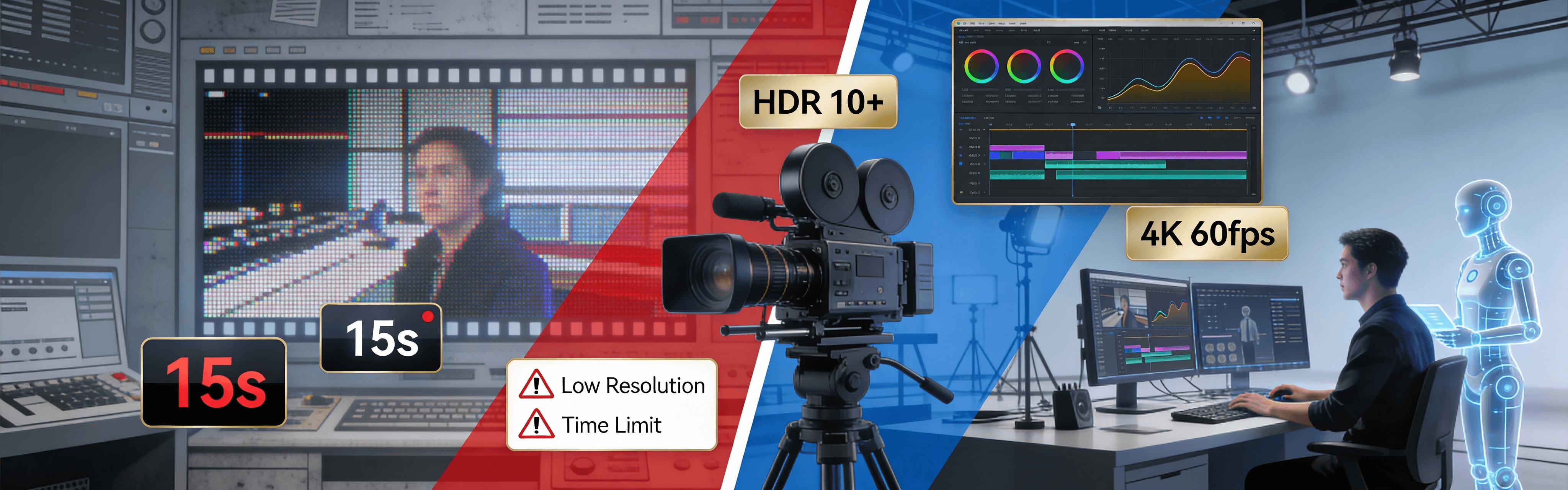
The landscape of video content creation is shifting beneath our feet, and many professionals are still operating under outdated assumptions about what AI video generation can and cannot do. Whether you're a filmmaker, content creator, or business owner looking to leverage video for your brand, it's time to separate fact from fiction.
Let's bust four persistent myths that are holding creators back from embracing this revolutionary technology.
Myth #1: AI Models Are Always Trained on Illegally Obtained Data

The Old Belief: "AI video models scrape the internet indiscriminately, stealing copyrighted content without permission. Therefore, using them puts me at legal risk."
This concern has been the elephant in the room since generative AI exploded onto the scene. Many creators have avoided AI tools entirely, fearing legal complications or ethical compromises. The worry was understandable—early discussions around AI training data were murky at best.
The Reality Today:
The industry has matured significantly. Companies like Moonvalley have developed models trained on properly licensed datasets, with transparent data sourcing practices. The legal framework is evolving rapidly, with several approaches now available:
Licensed training data: Companies partnering with content libraries and stock footage providers
Synthetic data generation: Training on AI-generated content that doesn't infringe on existing copyrights
Opt-in contributor programs: Where creators voluntarily license their work for model training in exchange for compensation
The key is doing your due diligence. Before adopting any AI video tool, research their training practices. Reputable companies are now transparent about their data sources and actively work to ensure legal compliance.
What This Means for You: You can confidently explore AI video tools without automatically exposing yourself to legal risk—but choose your platforms wisely.
Myth #2: Clip Duration Is Limited to 10 Seconds and Output Resolution Is Low
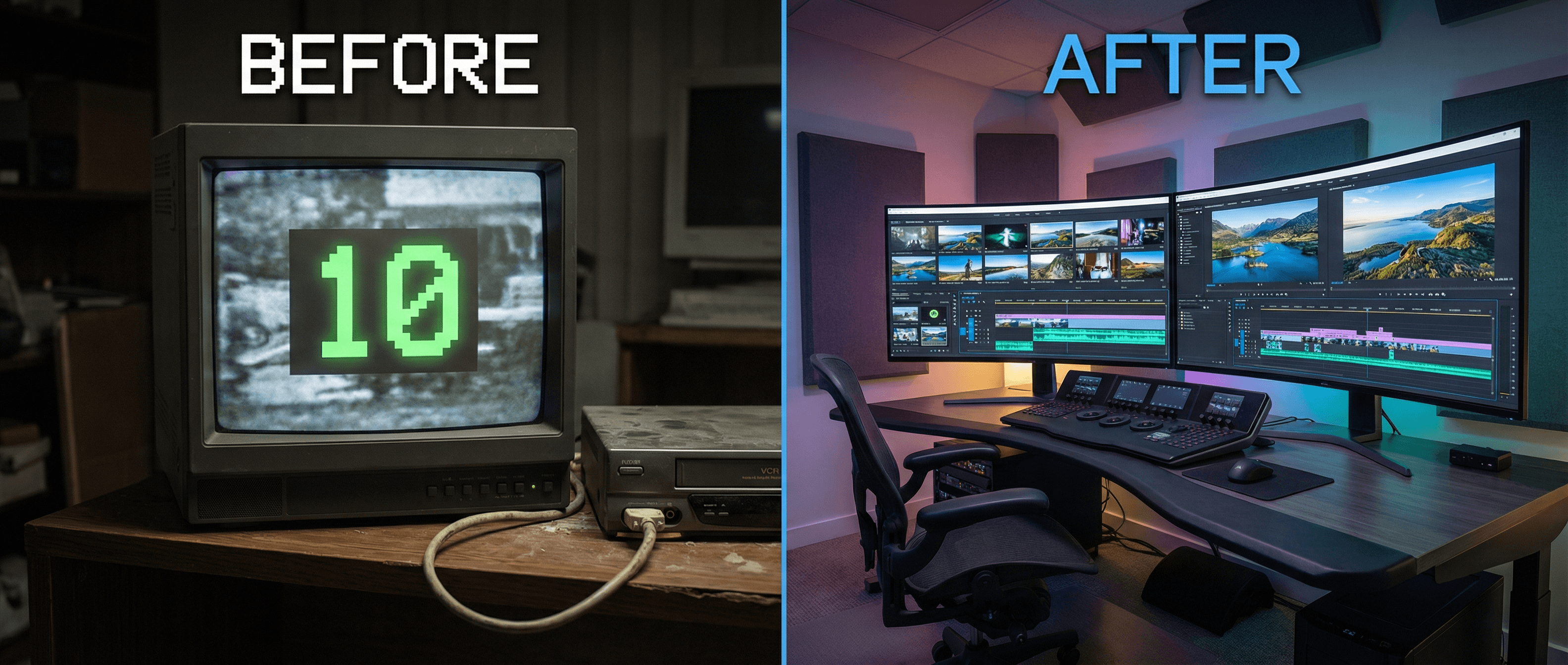
The Old Limitation: "AI video is only good for short social media clips. The 5-10 second limits and low resolutions make it useless for serious film work."
This was absolutely true six months ago. Early AI video generators were constrained by computational limitations, producing brief, often low-resolution clips that seemed destined only for Instagram Stories or TikTok experiments.
The Breakthrough:
Tools like Lighttricks' LTX-2 with more than 15 seconds or LongCat with up to 1000 frames output length have shattered these constraints. We're now seeing:
Extended durations: Moving beyond the 10-second barrier to clips that can serve as actual scene components
Higher resolutions: Output quality that meets professional standards for digital distribution
Improved temporal coherence: Better consistency across longer sequences, reducing the jarring artifacts that plagued earlier generations
While we're not yet at the point of generating feature-length films in a single prompt, the trajectory is clear. Today's limitations are tomorrow's footnotes.
What This Means for You: AI video generation is no longer just for social media snippets. It's becoming a viable tool for commercial work, corporate videos, and even preliminary film production.
Myth #3: Output Is Limited to 8-Bit (No HDR Support)
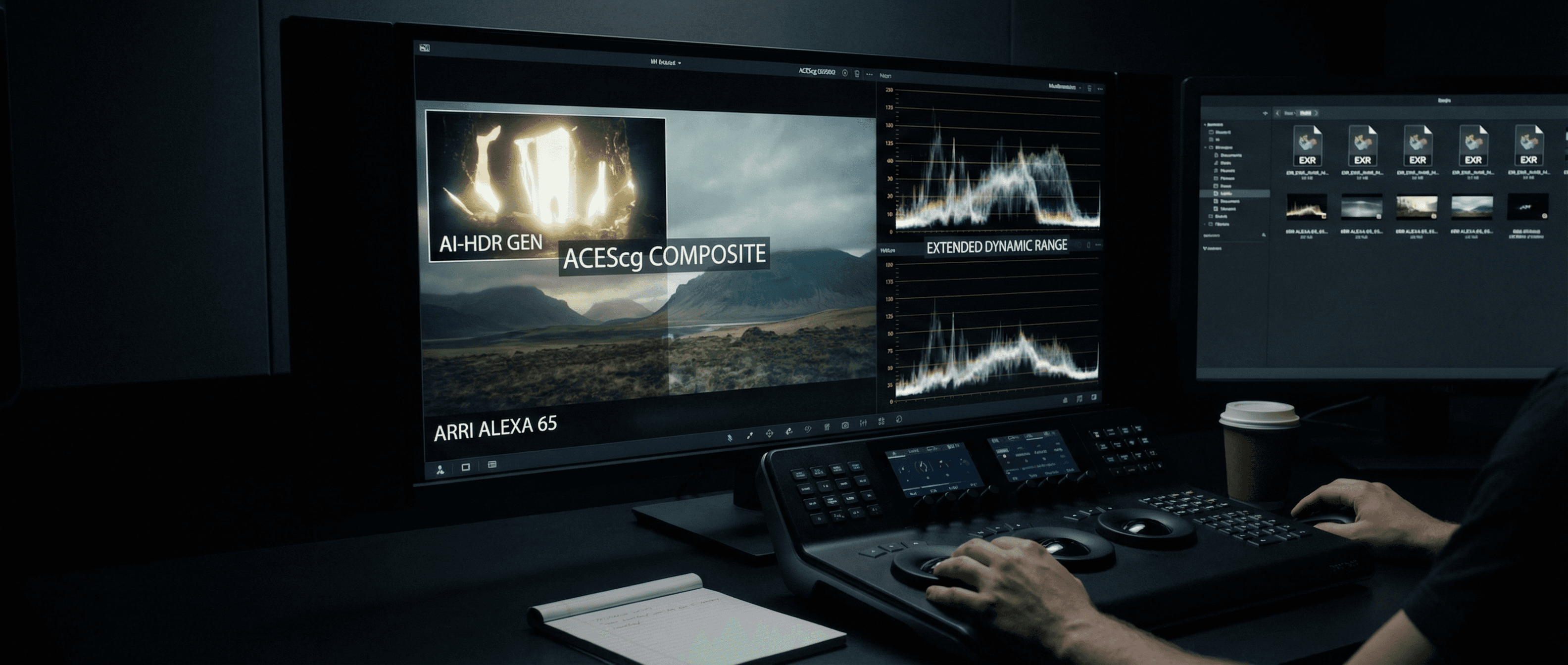
The Old Technical Barrier: "AI video output is locked at 8-bit color depth, making it incompatible with modern HDR workflows and professional post-production pipelines."
For film professionals, this was perhaps the most damning limitation. Modern cinema and high-end commercial work demand HDR (High Dynamic Range) with 10-bit or higher color depth. An 8-bit limitation meant AI-generated footage would stick out like a sore thumb in any professional project, with visible banding and limited color grading flexibility. More critically, it made compositing AI-generated elements with footage from professional cinema cameras like ARRI Alexa, RED, or Blackmagic completely impractical.
The Game-Changer:
Platforms like Luma AI's Ray 3 now offer HDR-capable output—and not just any HDR output. This is a genuine revolution for professional workflows:
The Compositing Breakthrough: For the first time, you can seamlessly composite AI-generated HDR material with footage from professional film cameras. This was simply impossible until now. Imagine generating a complex CGI element or background plate with AI and dropping it into your Alexa or RED footage timeline without quality compromises or painful workarounds. The implications for VFX work, virtual production, and indie filmmaking are staggering.
Color Management Revolution: Ray 3 doesn't just output HDR—it's color-managed and outputs in ACEScg color space. For non-technical readers, think of this as speaking the same professional language as high-end VFX studios. ACEScg (Academy Color Encoding System) is specifically designed for professional compositing workflows, ensuring that colors remain consistent and predictable throughout the post-production pipeline.
This means:
No more color shifts when integrating AI footage with traditionally shot material
Predictable behavior in professional grading software
True integration into Hollywood-standard workflows
The Cost Reality: However, there's a significant caveat. Ray 3 with HDR enabled is even more expensive than Google's Veo 3.1—currently the most expensive model on the market. Why? Two reasons:
Computational intensity: HDR processing requires substantially more computing power
File format: Ray 3 outputs in EXR (OpenEXR) format rather than compressed MP4
EXR files are the industry standard for professional VFX work, preserving maximum image quality and data for compositing. But they're also massive—often 10-50 times larger than compressed MP4 files. This means higher storage costs and longer transfer times, in addition to the premium generation costs.
What This Means for You:
For professionals: The technical gap between AI-generated and traditionally produced video has essentially disappeared. You can now integrate AI content into feature film pipelines with confidence.
For small businesses and content creators: Standard 8-bit output from other models remains perfectly adequate for social media and web content. The HDR revolution is primarily relevant when you're working in professional film production environments.
Myth #4: GenAI Output Cannot Be Copyrighted
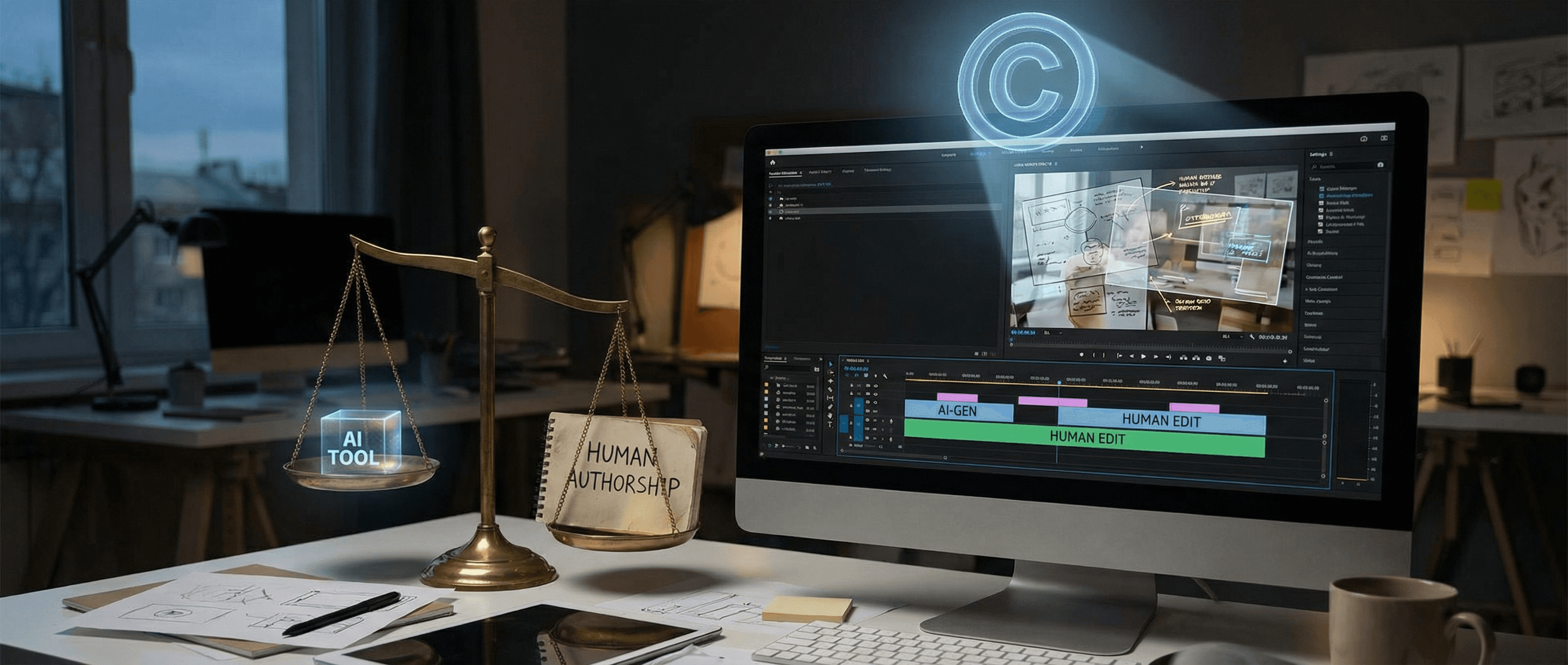
The Legal Uncertainty: "If I use AI to generate video content, I can't copyright the result, leaving my work unprotected and free for anyone to use."
This myth stems from genuine legal ambiguity. Early court cases and copyright office rulings created confusion about whether AI-generated content could receive copyright protection. For commercial creators, this represented an existential threat—why invest time and resources in content you can't legally protect?
The Evolving Landscape:
The reality is more nuanced than the myth suggests. Copyright law is adapting, and the key factor is human creative input:
Pure AI output: Minimal human involvement may indeed face copyright challenges
AI-assisted creation: Significant human direction, selection, and post-production typically qualifies for protection
Hybrid workflows: Combining AI-generated elements with traditional production methods strengthens copyright claims
Legal experts now recognize that most professional use of AI video tools involves substantial human creativity—from crafting detailed prompts to curating outputs to integrating AI elements into larger projects. This creative contribution is increasingly recognized as copyrightable.
Jurisdictions worldwide are developing frameworks to address this question. While we're still in a transitional period, the trend is toward recognizing copyright protection for AI-assisted works where demonstrable human authorship exists.
What This Means for You: Document your creative process. Show your prompts, your selection criteria, your edits, and modifications. This paper trail helps establish your copyright claim and protects your commercial interests.
The Impact on Content Creation and Your Business
These four busted myths reveal a fundamental shift: AI video generation has moved from experimental novelty to professional tool.
For the broader market:
Lower barriers to entry for video content creation
Faster iteration and prototyping for commercial projects
New creative possibilities previously constrained by budget and time
A democratization of high-quality video production
For film professionals:
AI as collaborator rather than replacement
Acceleration of pre-visualization and concept development
Enhanced creative possibilities in post-production through seamless compositing
Professional-grade color management integration
New revenue streams from AI-assisted production services
How This Connects to Your Social Media Strategy with CASSI
Here's where this revolution intersects with your daily marketing challenges: video content is no longer optional for social media success, and creating it no longer requires a production crew.
At CASSI, we understand that as a solopreneur, freelancer, or small business owner, you're already juggling countless responsibilities. The explosion of accessible AI video tools means you should be leveraging video content—but who has time to learn yet another complex platform?
While CASSI doesn't currently generate video content, we recognize that video is increasingly central to social media strategy. That's why CASSI already supports video uploads for posting to YouTube and TikTok, helping you maintain a consistent posting schedule across all content types—text, images, and video.
This integrated approach means:
Unified scheduling: Manage your video content alongside your other posts in one place
Consistent brand presence: Whether you're posting text, images, or video, CASSI helps you maintain your brand voice
Time savings: No need to switch between multiple platforms to schedule content for YouTube and TikTok
Strategic planning: View your entire content calendar—including video—at a glance
As AI video tools become more accessible and legally sound, and as platforms like YouTube and TikTok continue to prioritize video content, having a streamlined way to manage and schedule your video alongside your other content becomes essential.
The myths we've busted today clear the path for small businesses to confidently embrace video content. Whether you're creating videos with AI tools, hiring creators, or producing content yourself, CASSI ensures your video strategy integrates seamlessly with your overall social media presence.
The Bottom Line
The four myths we've explored—illegal training data, duration limits, technical constraints, and copyright uncertainty—are relics of AI video's early days. Today's reality offers legally compliant, technically sophisticated, and commercially viable video generation tools.
For film professionals, the ACEScg color-managed, HDR-capable output represents a watershed moment—AI-generated content can now sit alongside ARRI, RED, and Blackmagic footage in professional compositing workflows. Yes, it comes at a premium cost, but the creative possibilities are unprecedented.
For content creators and businesses, the democratization of video production continues accelerating. You don't need Hollywood-grade workflows—standard AI video tools already produce content more than adequate for social media and digital marketing.
And with platforms like CASSI streamlining how you schedule and post video content to YouTube and TikTok alongside your other marketing materials, the operational barriers are falling too.
The question isn't whether AI will transform video content creation—it's whether you'll be ahead of the curve or playing catch-up.
Ready to streamline your social media strategy? CASSI helps small businesses and solopreneurs create and schedule consistent, on-brand content effortlessly—including video uploads to YouTube and TikTok. Focus on creating great content; let CASSI handle the scheduling and consistency.
www.getcassi.ai